China's High-End Manufacturing Shift: Strategic Realignment 2026
An analysis of China's 2026 industrial pivot toward advanced robotics, semiconductors, and green technology.
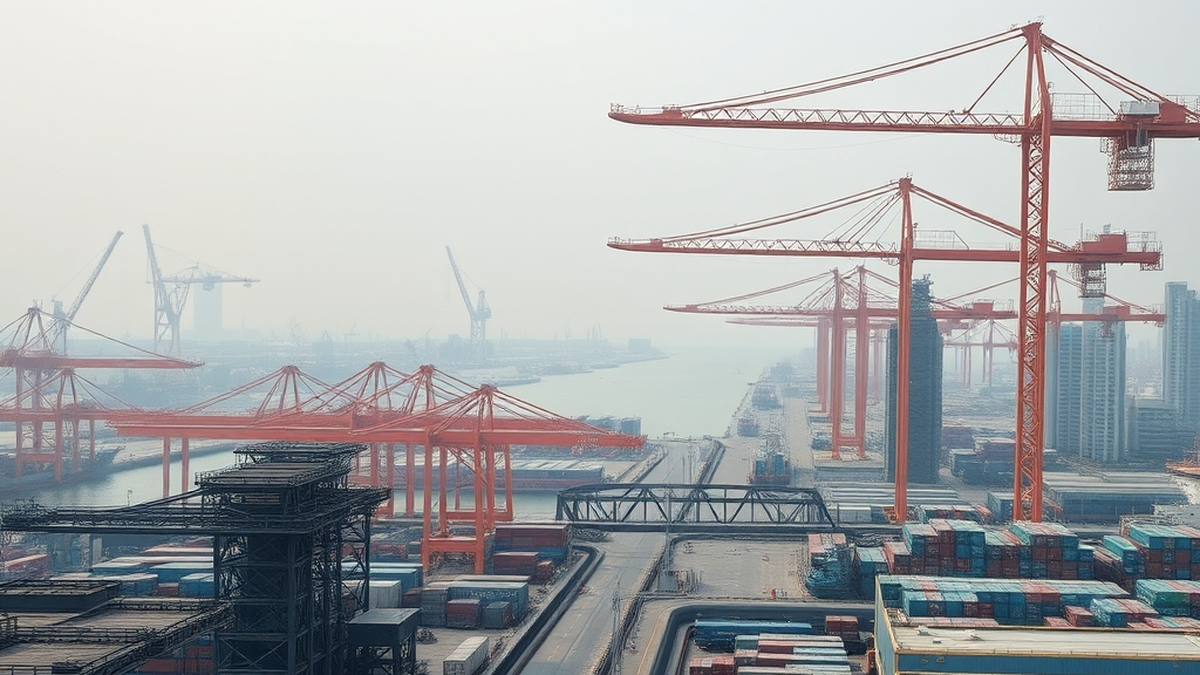
The industrial landscape of the People’s Republic of China is undergoing its most significant structural realignment since the opening-up reforms of the late 20th century. By mid-2026, the transition from labor-intensive assembly to high-value, technology-intensive manufacturing has moved from a policy objective to a realized economic state. This shift, driven by a combination of demographic pressures, rising domestic labor costs, and a strategic imperative for technological self-reliance, is fundamentally altering global trade flows. As Beijing prioritizes the ‘three new’ sectors—electric vehicles, lithium-ion batteries, and renewable energy—while aggressively expanding into advanced robotics and domestic semiconductor fabrication, the global manufacturing hierarchy is being redrawn.
The Robotics Revolution in the Pearl River Delta
The traditional ‘factory of the world’ model, once characterized by vast dormitories and manual assembly lines, has been largely superseded by high-density automation. In the Pearl River Delta, industrial robotics density has reached unprecedented levels as firms respond to a shrinking working-age population. Domestic robotic manufacturers, bolstered by state-backed R&D grants and preferential tax treatment, now provide the primary machinery for consumer electronics and automotive assembly. This localization of the industrial supply chain has reduced reliance on Japanese and German capital equipment, while simultaneously increasing the precision and throughput of Chinese factories. The integration of artificial intelligence into these robotic systems allows for dynamic line reconfiguration, enabling manufacturers to pivot production between different product models with minimal downtime, a capability that is essential for maintaining competitiveness in a rapidly evolving global market.
Semiconductor Sovereignty and Localized Supply Chains
Central to China’s industrial realignment is the pursuit of semiconductor sovereignty. Despite ongoing international export controls on advanced lithography equipment, China has significantly expanded its capacity in legacy and mid-tier nodes, which remain critical for the automotive, industrial, and consumer appliance sectors. Massive capital injections into domestic firms have fostered a localized ecosystem of materials suppliers, etching tool manufacturers, and packaging facilities. By 2026, a substantial portion of the chips found in Chinese-made industrial machinery and vehicles are designed and fabricated within the country. This internal-loop strategy minimizes the risk of external supply shocks while providing a captive market for domestic semiconductor firms to refine their technologies. The broader impact is a bifurcation of the global semiconductor market, with China establishing a self-sustained ecosystem that increasingly operates independently of traditional Western supply hubs.
The ‘Three New’ Sectors as Export Engines
The dominance of Chinese firms in the electric vehicle (EV) and battery sectors has reached a point of maturity where these industries now serve as the primary drivers of export growth. The vertical integration of Chinese EV manufacturers—who often control everything from lithium processing to finished vehicle assembly—provides a cost advantage that has proved difficult for international competitors to match. Furthermore, the expansion of high-capacity battery production has solidified China’s position as the indispensable partner in the global energy transition. As European and North American markets grapple with infrastructure and cost challenges, Chinese manufacturers are aggressively targeting emerging markets in Southeast Asia, Latin America, and the Middle East, establishing new trade corridors that bypass traditional Western consumer centers. This geographical diversification of exports provides a buffer against trade volatility and reinforces China’s role as the central hub of the 21st-century green economy.
Policy-Driven Capital Allocation and Structural Reform
The speed of this industrial transformation is the direct result of coordinated state policy and capital allocation. The 2026 industrial guidelines emphasize quality over quantity, discouraging investment in traditional heavy industries like steel and cement while funneling credit toward ‘little giants’—specialized small and medium-sized enterprises that hold dominant positions in niche technology markets. This targeted credit expansion is accompanied by structural reforms aimed at improving the efficiency of state-owned enterprises (SOEs) and encouraging private-sector innovation. By aligning financial incentives with strategic technology goals, the Chinese government has created an environment where industrial advancement is inextricably linked to national economic security. This policy-driven approach ensures that capital is deployed toward sectors that offer the highest long-term strategic value, even if they require significant upfront investment and carry higher levels of risk.
Global Supply Chain Reconfiguration and Nearshoring
China’s move up the value chain is forcing a global reconfiguration of supply chains. As low-end manufacturing migrates to Southeast Asia and South Asia, China is evolving into a provider of high-tech components and industrial machinery for these emerging manufacturing hubs. This ‘China Plus One’ strategy, once seen as a way to reduce reliance on the Chinese market, has paradoxically increased the demand for Chinese expertise and equipment. Simultaneously, the trend toward ‘nearshoring’ in North America and Europe has led Chinese firms to establish local production facilities in regions like Mexico and Eastern Europe to maintain market access. This expansion of the Chinese industrial footprint ensures that even as final assembly moves closer to the end consumer, the core technology and capital goods often remain rooted in the Chinese industrial ecosystem.
The shift toward high-end manufacturing is no longer a future projection but the defining characteristic of the Chinese economy in 2026. This realignment secures China’s position as a dominant force in the global industrial hierarchy for the foreseeable future. Emerging Markets Economy continues to monitor these structural shifts as they redefine the landscape of global trade and investment.