Ethiopia's Industrial Parks: Textile Exports and Logistics
A mid-2026 update on Ethiopia's industrial park strategy, focusing on its role in driving textile exports and the challenges in logistics and energy infrastructure.
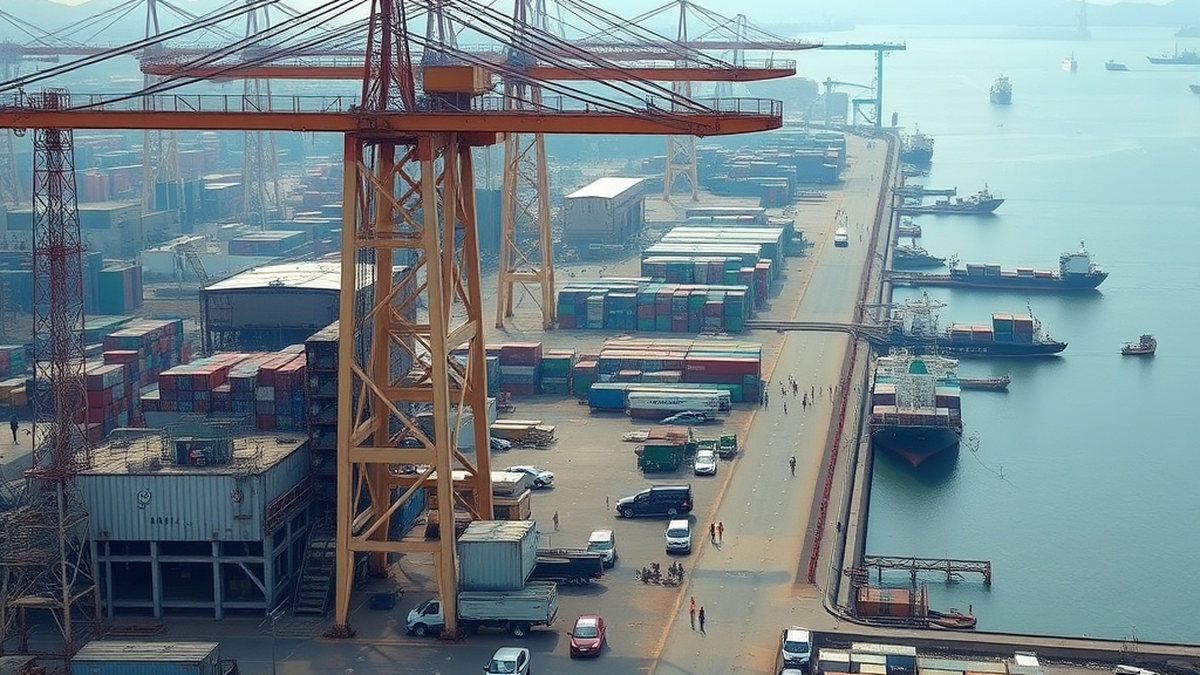
Ethiopia’s industrial park strategy, a central component of its vision to become a light-manufacturing hub in Africa, has reached a critical juncture by mid-2026. These specialized zones, which offer integrated infrastructure and tax incentives, have been successful in attracting global textile and apparel manufacturers and in driving export growth. However, the sector continues to face significant challenges related to logistics efficiency, energy reliability, and the need for greater integration with the domestic supply chain. The Ethiopian government’s focus on resolving these bottlenecks and on improving the competitiveness of its industrial zones is proving essential for maintaining the country’s attractiveness to foreign investors and for the long-term sustainability of its industrialization agenda.
The Growth of Textile and Apparel Exports
The textile and apparel sector remains the primary focus of Ethiopia’s industrial parks. By 2026, dozens of international firms from China, India, and Sri Lanka have established large-scale production facilities in parks like Hawassa, Bole Lemi, and Adama. These parks provide manufacturers with ready-to-use factory buildings, reliable (albeit still occasionally interrupted) power, and centralized wastewater treatment. The ability to offer competitive labor costs and duty-free access to major markets in Europe and the United States has been a key factor in attracting these global players. This sector’s growth is providing a vital source of foreign exchange and is creating thousands of jobs, particularly for women and young people in rural and semi-urban areas.
Addressing Logistics and the Djibouti Corridor
The efficiency of the logistics corridor connecting Ethiopia’s landlocked industrial parks with the port of Djibouti is the lifeblood of its export-oriented economy. By mid-2026, significant investments are being made to modernize the Addis Ababa-Djibouti railway and to improve the integration of inland container depots with the industrial zones. These improvements are aimed at reducing the time and cost of transporting raw materials and finished goods, which remains one of the primary constraints on Ethiopia’s manufacturing competitiveness. The government is also exploring the development of alternative trade routes, including the Berbera corridor in Somaliland, to enhance the resilience and flexibility of its logistics network.
Energy Reliability and the Shift to Renewables
Ensuring a stable and affordable supply of electricity is essential for the continuous operation of high-volume manufacturing. By 2026, the integration of the Grand Ethiopian Renaissance Dam (GERD) into the national grid has significantly increased Ethiopia’s total power capacity. However, localized distribution challenges and the need for more resilient energy infrastructure within the industrial parks remain critical concerns. The government is encouraging the development of on-site renewable energy projects, including solar and wind, to provide a buffer against grid disruptions and to meet the sustainability requirements of global brands. This shift toward a greener energy mix is also part of Ethiopia’s broader strategy to position itself as a sustainable manufacturing destination.
Strengthening Domestic Supply Chains and Backward Linkages
For Ethiopia to maximize the benefits of its industrial park strategy, it must develop a more robust domestic supply chain and foster stronger links between the industrial zones and the local economy. By mid-2026, there is a concerted effort to encourage local firms to become suppliers for the multinational corporations operating in the parks. This involves providing technical assistance and access to credit for Ethiopian SMEs specializing in yarn, fabric, and accessories production. Strengthening these ‘backward linkages’ will not only increase the domestic value-added of exports but will also make the manufacturing sector more resilient to global supply shocks. The government is also promoting the development of ‘agro-industrial’ parks to better integrate the country’s vast agricultural resources into the manufacturing value chain.
Labor Relations and Workforce Productivity
The rapid expansion of the manufacturing sector has brought challenges related to labor relations and workforce productivity to the fore. In 2026, the focus has shifted from the mere quantity of labor to the quality and productivity of the workforce. The government and the private sector are collaborating on large-scale vocational training and management development programs to ensure that Ethiopian workers can meet the technical and quality standards of international markets. Simultaneously, there is an increasing emphasis on improving worker well-being and on fostering more collaborative labor-management relations within the industrial parks. Ensuring a stable and productive labor environment is essential for maintaining the long-term competitiveness of Ethiopia’s manufacturing sector.
Ethiopia’s industrial park strategy represents a bold and ambitious attempt to drive structural transformation through manufacturing. While significant challenges remain in terms of infrastructure and logistics, the country’s commitment to providing a favorable environment for industrial investment is yielding results. Emerging Markets Economy will continue to track the policy and economic developments that define Ethiopia’s trajectory as an emerging African manufacturing hub.