Vietnam in the China Plus One Strategy: Manufacturing Expansion
A report on Vietnam's emergence as a key manufacturing hub in the global supply chain reconfiguration.
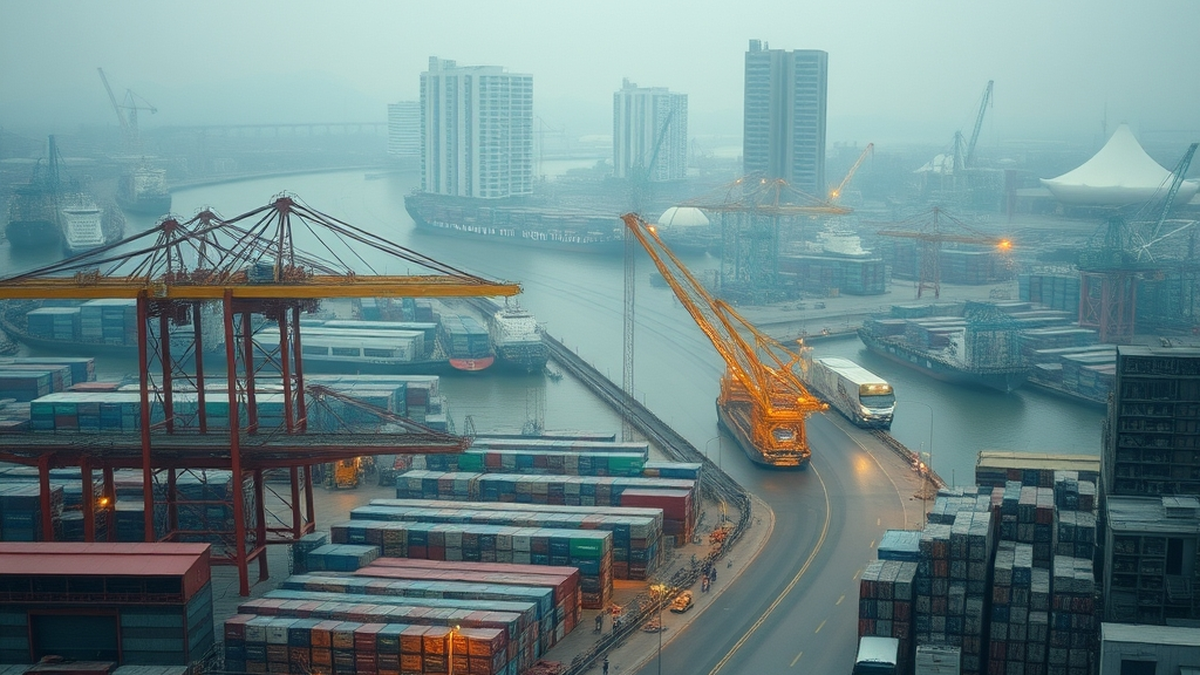
Vietnam has solidified its position as a primary beneficiary of the ‘China Plus One’ strategy, a trend that has accelerated significantly by mid-2026. As multinational corporations seek to diversify their manufacturing bases away from China to mitigate geopolitical risks and rising costs, Vietnam’s proximity, competitive labor market, and aggressive pursuit of free trade agreements have made it an indispensable hub in the global electronics and apparel supply chains. This transition is transforming the country from a low-cost assembly site into a sophisticated manufacturing center, though it faces emerging challenges in infrastructure capacity and labor skills. The evolution of Vietnam’s industrial sector is now a critical component of the broader economic shift within Southeast Asia.
The Influx of High-Tech Manufacturing
The most notable shift in Vietnam’s industrial landscape is the rapid growth of the high-tech sector. Major global electronics firms, including leaders in semiconductor packaging and consumer electronics assembly, have significantly expanded their presence in the northern and southern industrial clusters. By 2026, Vietnam is no longer just producing simple components but is increasingly involved in the assembly of high-value devices like smartphones, tablets, and advanced telecommunications equipment. This influx of capital has led to the development of specialized industrial parks that offer integrated logistics and stable energy supplies. The government’s focus on attracting ‘quality’ foreign direct investment (FDI) has prioritized projects that involve technology transfer and the integration of local suppliers into the global value chain.
Free Trade Agreements as a Catalyst
Vietnam’s proactive approach to international trade has been a primary driver of its manufacturing boom. Participation in a wide range of free trade agreements (FTAs), including the Comprehensive and Progressive Agreement for Trans-Pacific Partnership (CPTPP) and the EU-Vietnam Free Trade Agreement (EVFTA), has provided Vietnamese-made goods with preferential access to the world’s largest consumer markets. In 2026, these agreements are proving crucial as global trade becomes increasingly fragmented. Manufacturers located in Vietnam can leverage these trade links to offset the impact of tariffs and trade barriers affecting other regions. The country’s commitment to multilateralism has not only attracted foreign firms but has also encouraged domestic enterprises to improve their standards and competitiveness to meet the requirements of international markets.
Infrastructure Bottlenecks and Energy Security
The rapid pace of industrialization has put significant strain on Vietnam’s infrastructure and energy networks. By mid-2026, addressing port congestion, improving the efficiency of inland transport, and ensuring a stable supply of electricity have become the government’s top economic priorities. Massive investments are being directed toward the expansion of deep-water ports like Lach Huyen in the north and the development of the North-South Expressway. Furthermore, the transition toward a greener economy has necessitated a shift in the energy mix, with a focus on liquefied natural gas (LNG) and renewable energy sources like wind and solar. Ensuring that industrial zones have access to reliable and sustainable power is essential for maintaining the country’s attractiveness to high-tech manufacturers who require continuous production cycles.
Upgrading the Labor Force and Skill Development
As Vietnam moves up the value chain, the demand for skilled labor and technical expertise is outpacing the current supply. The transition from labor-intensive industries to automated and technology-driven manufacturing requires a workforce capable of operating sophisticated machinery and managing complex production systems. In 2026, the Vietnamese government and private sector are collaborating on large-scale vocational training and higher education reforms. Incentives are being provided for firms that invest in on-the-job training and skills development for their employees. While the ‘demographic dividend’ remains a strength, the focus has shifted from the quantity of labor to the quality and productivity of the workforce, a necessary step to avoid the ‘middle-income trap’ and sustain long-term growth.
The Role of Local Supply Chains and Supporting Industries
For Vietnam to maximize the benefits of the FDI influx, it must develop a robust network of domestic supporting industries. By 2026, there is a concerted effort to encourage local firms to become suppliers for the multinational corporations operating in the country. Currently, many raw materials and intermediate components are still imported, particularly from China. Strengthening local supply chains will not only increase the domestic value-added of exports but will also make the manufacturing sector more resilient to global supply shocks. Programs aimed at providing technical assistance and access to credit for Vietnamese SMEs are central to this strategy, fostering a more integrated and self-sustained industrial ecosystem that can thrive independently of foreign capital over the long term.
Vietnam’s emergence as a central node in the ‘China Plus One’ framework represents a fundamental shift in the global manufacturing map. While infrastructure and labor challenges remain, the country’s strategic trade policies and growing high-tech sector position it for continued industrial expansion. Emerging Markets Economy will continue to track the policy and economic developments that define Vietnam’s trajectory as a global manufacturing powerhouse.